Temporary StorageSupply ChainProject LogisticsIndustrial StorageRisk Mitigation
Using Temporary Storage to Bridge Supply Chain Gaps in Large Projects
Learn how temporary storage helps large projects stay on schedule by bridging supply chain gaps and managing inventory during delays.
Large-scale projects rarely move in a straight line. Materials arrive early. Installation crews get delayed. Permits take longer than expected. Overseas shipments arrive all at once rather than in phases.
When that happens, businesses face a simple but serious question: where does everything go in the meantime?
Temporary storage is often the answer. When managed properly, it becomes more than extra space — it becomes a strategic buffer that protects timelines, budgets, and working relationships.
For companies operating in and around Vineland, NJ, access to secure industrial-focused warehousing can make the difference between a smooth project and a costly slowdown. At T2G Logistics, temporary storage isn’t an afterthought. It’s part of a structured logistics approach built to support large infrastructure and renewable energy projects across the Northeast corridor.
Why supply chain gaps happen in large projects
Even well-planned projects encounter disruptions. According to research from MIT’s Center for Transportation & Logistics, variability in supply chain timing is one of the leading causes of cost overruns in complex infrastructure projects. Small timing mismatches compound quickly.
Common causes of supply chain gaps include:
- Staggered international shipments
- Port congestion or customs clearance delays
- Site readiness delays
- Weather interruptions
- Labor scheduling conflicts
- Equipment arriving ahead of installation windows
When materials arrive before they’re needed, businesses often scramble for short-term solutions. That scramble can lead to unsecured storage, increased risk of damage, and unnecessary transportation costs. Temporary storage, when planned in advance, removes that uncertainty.
What temporary storage really does for large projects
Temporary storage isn’t just about square footage. It’s about flexibility. For industrial and infrastructure projects — especially in sectors like renewable energy — storage plays several important roles:
1. Acts as a project buffer
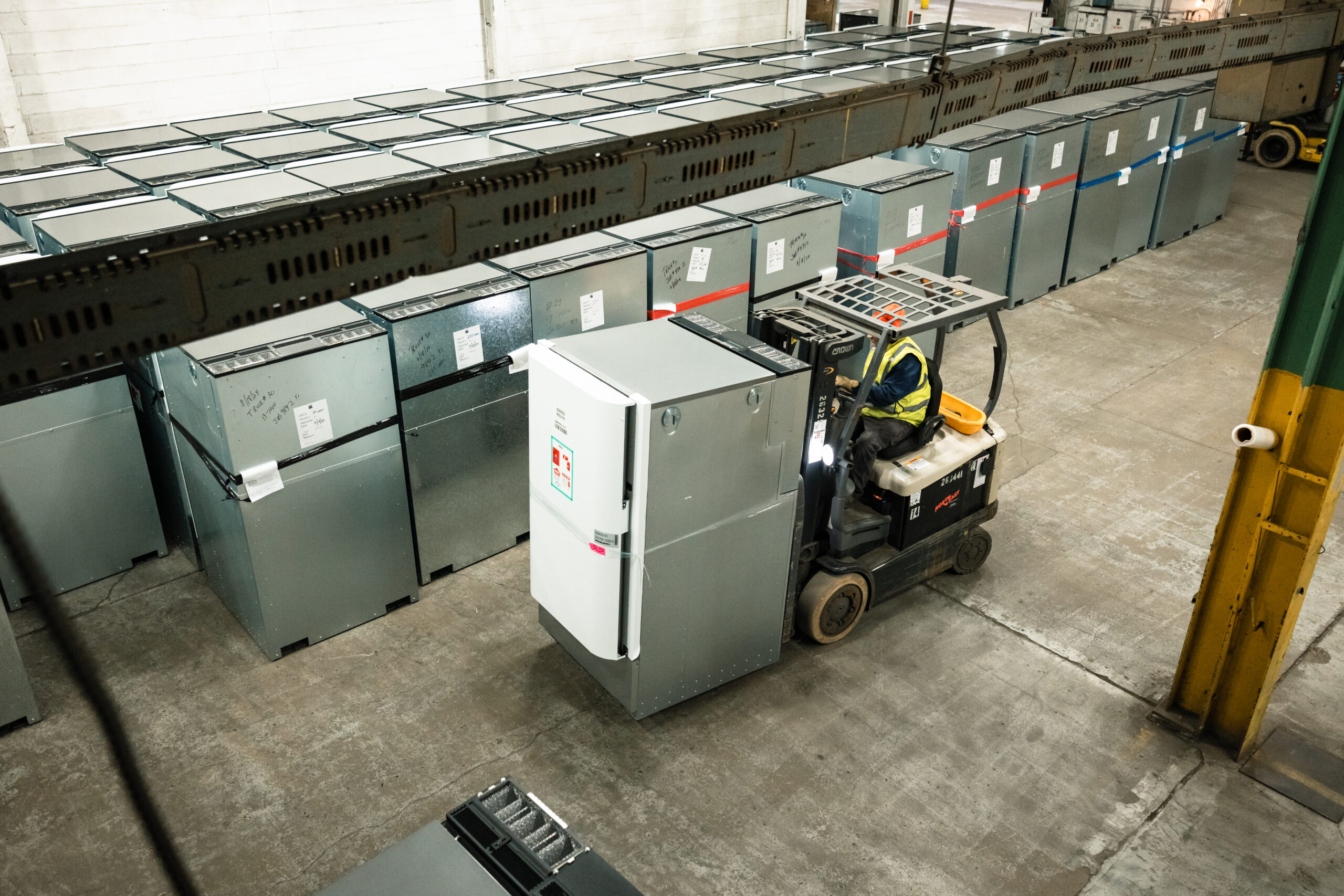
A warehouse becomes a controlled holding point between suppliers and job sites. This buffer absorbs timing mismatches, allowing teams to release materials in phases. Instead of rushing deliveries directly to the field, materials can be staged strategically.
2. Protects high-value equipment
Renewable energy components such as PV modules and hydrogen fuel cells require protection from moisture, impact, and improper stacking. Improvised storage can increase the risk of microcracks, packaging failure, and handling damage. Proper indoor industrial storage reduces that exposure and preserves product integrity.
3. Improves inventory visibility
Temporary warehousing creates an opportunity for inventory tracking and documentation. Materials can be verified upon arrival, counted, and inspected before release. This step alone can prevent installation-day surprises.
The growing importance of storage in renewable and infrastructure projects
Renewable energy and infrastructure projects are particularly sensitive to timing and material handling.
The U.S. Department of Energy has documented that damage to solar modules during handling and storage can reduce system efficiency over time. Improper staging increases the likelihood of microfractures, even if they aren’t immediately visible. Hydrogen fuel systems and related components also require controlled environments to maintain safety and compliance.
For companies in Southern New Jersey and surrounding markets such as Philadelphia, New York, and Baltimore, access to specialized industrial warehousing near major transportation corridors becomes essential. That’s where a regional operator-based provider makes a difference.
Why location matters: Vineland, NJ as a strategic hub
Vineland, NJ offers strong logistical advantages. Positioned within reach of major Northeast metropolitan areas, it allows businesses to stage materials near project sites without paying premium metropolitan warehouse rates.
T2G Logistics operates three facilities totaling approximately 100,000 square feet in Vineland. This footprint provides:
- Rapid access to New York, Boston, Philadelphia, and Baltimore
- Reduced drayage time from ports
- Proximity to regional infrastructure projects
- Industrial-grade storage suited for bulky commodities
For large projects spanning multiple states, centralized storage in South Jersey enables controlled distribution to job sites.
Common scenarios where temporary storage bridges the gap
Scenario 1: Early overseas shipment arrival
A solar developer orders modules months in advance. The shipment arrives earlier than anticipated, but site grading is behind schedule. Without a secure staging facility, containers sit idle at the port, accumulating fees. With temporary warehousing in Vineland, modules can be offloaded, inspected, palletized correctly, and stored safely until the site is ready.
Scenario 2: Phased infrastructure rollout
An infrastructure project requires the installation of equipment in three phases over six months. Suppliers ship all components in one consolidated batch to meet production timelines. Instead of crowding the site, materials are staged in a warehouse and released in controlled batches.
Scenario 3: Weather delays
Northeast weather can interrupt construction unexpectedly. Temporary indoor storage protects sensitive equipment while crews wait for improved conditions.
Key factors to look for in temporary industrial storage
Not all storage facilities are suited for industrial-scale projects. Businesses evaluating temporary storage in and around Vineland, NJ should consider:
1. Industrial experience
Has the provider handled renewable energy components or bulky infrastructure materials before? Experience reduces risk.
2. Secure, operator-based facilities
Operator-run warehousing means the provider directly manages the facility. This typically results in better oversight and accountability than brokered alternatives.
3. Adequate space and layout
Large projects often involve oversized pallets or irregular freight. Warehouses must accommodate non-standard dimensions.
4. Controlled handling practices
Proper unloading, stacking, and pallet management matter. According to research published in the Journal of Construction Engineering and Management, improper handling of materials is a significant contributor to project delays and cost overruns. Handling procedures should be deliberate and consistent.
The financial impact of bridging supply chain gaps
Temporary storage can actually reduce total project costs. Consider the alternatives:
- Port demurrage charges
- Rush transportation fees
- On-site congestion
- Damage replacement costs
- Idle labor waiting for materials
Each of these expenses can escalate quickly. By introducing a structured staging environment, companies gain control over release timing and avoid reactive decisions. In large-scale projects, that control protects margins.
How T2G Logistics supports large projects
T2G Logistics is headquartered in Vineland, NJ and operates approximately 100,000 square feet of industrial warehousing space. We specialize in storing renewable energy products, infrastructure components, and other bulky commodities.
Rather than treating temporary storage as overflow space, we integrate it into a broader 3PL strategy that includes:
- Secure indoor warehousing
- Structured inventory management
- Phased release coordination
- Industrial-focused storage practices
With close access to major Northeast markets, T2G serves as a strategic staging partner for businesses operating in and around Vineland and beyond. The focus is straightforward: protect materials, maintain timelines, and reduce avoidable risk.
Temporary storage as a planning tool, not a last-minute fix
The most successful large projects treat temporary storage as part of the initial logistics plan. Instead of reacting to delays, project managers can proactively:
- Schedule phased deliveries
- Secure staging space in advance
- Align warehouse release schedules with construction milestones
- Build flexibility into supplier agreements
This approach transforms storage from a contingency measure into a structured project asset.
Turn supply chain gaps into strategic advantages
Large projects will always face timing gaps. The question is whether those gaps create stress or opportunity. Temporary industrial storage in Vineland, NJ can transform uncertainty into controlled flexibility — protecting valuable materials, maintaining installation schedules, and reducing financial exposure.
If your organization is planning a renewable energy, infrastructure, or large-scale industrial project in Southern New Jersey or the greater Northeast, let’s talk about how structured temporary storage can strengthen your logistics strategy.